
Your Custom Text Here
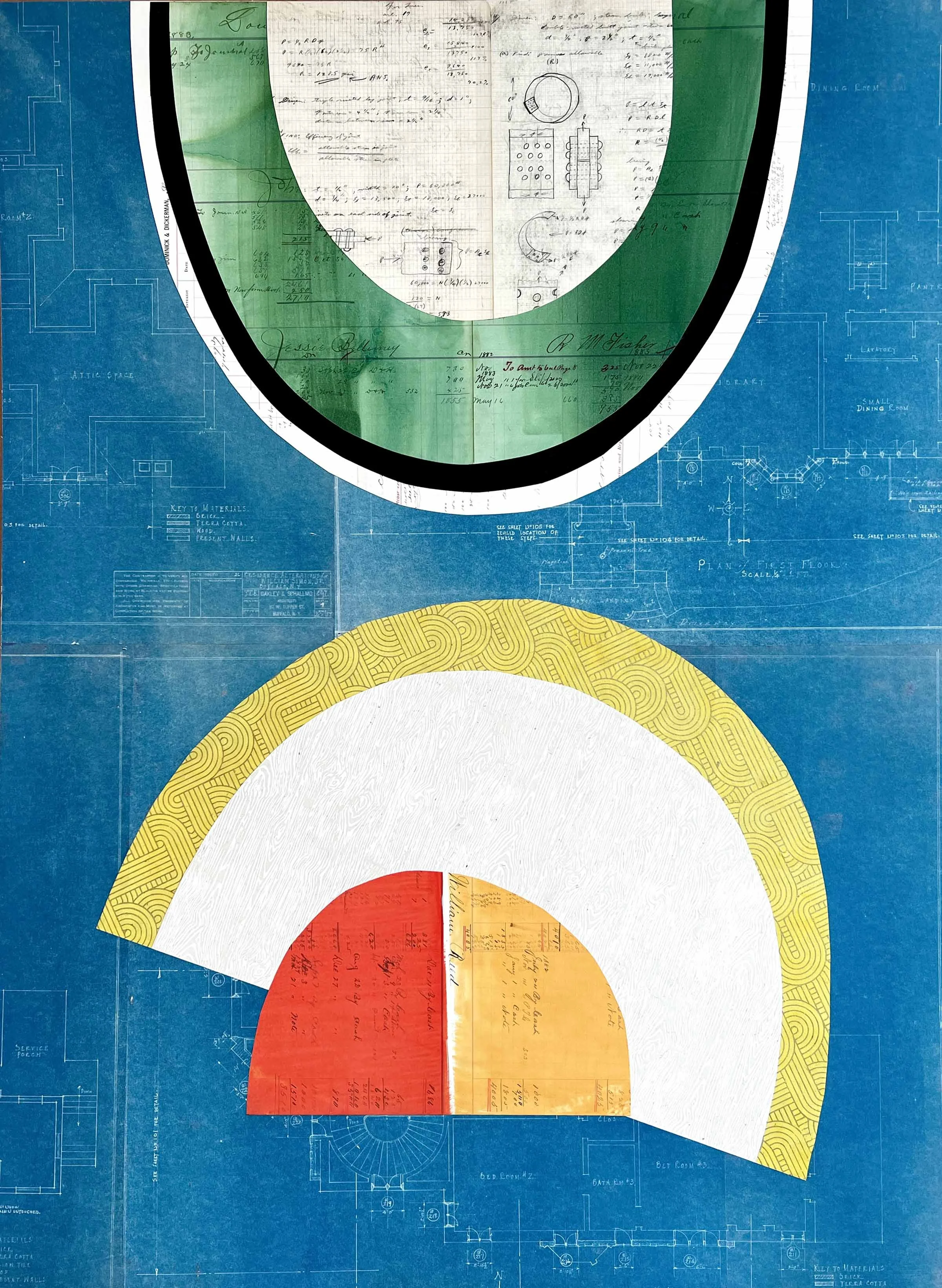
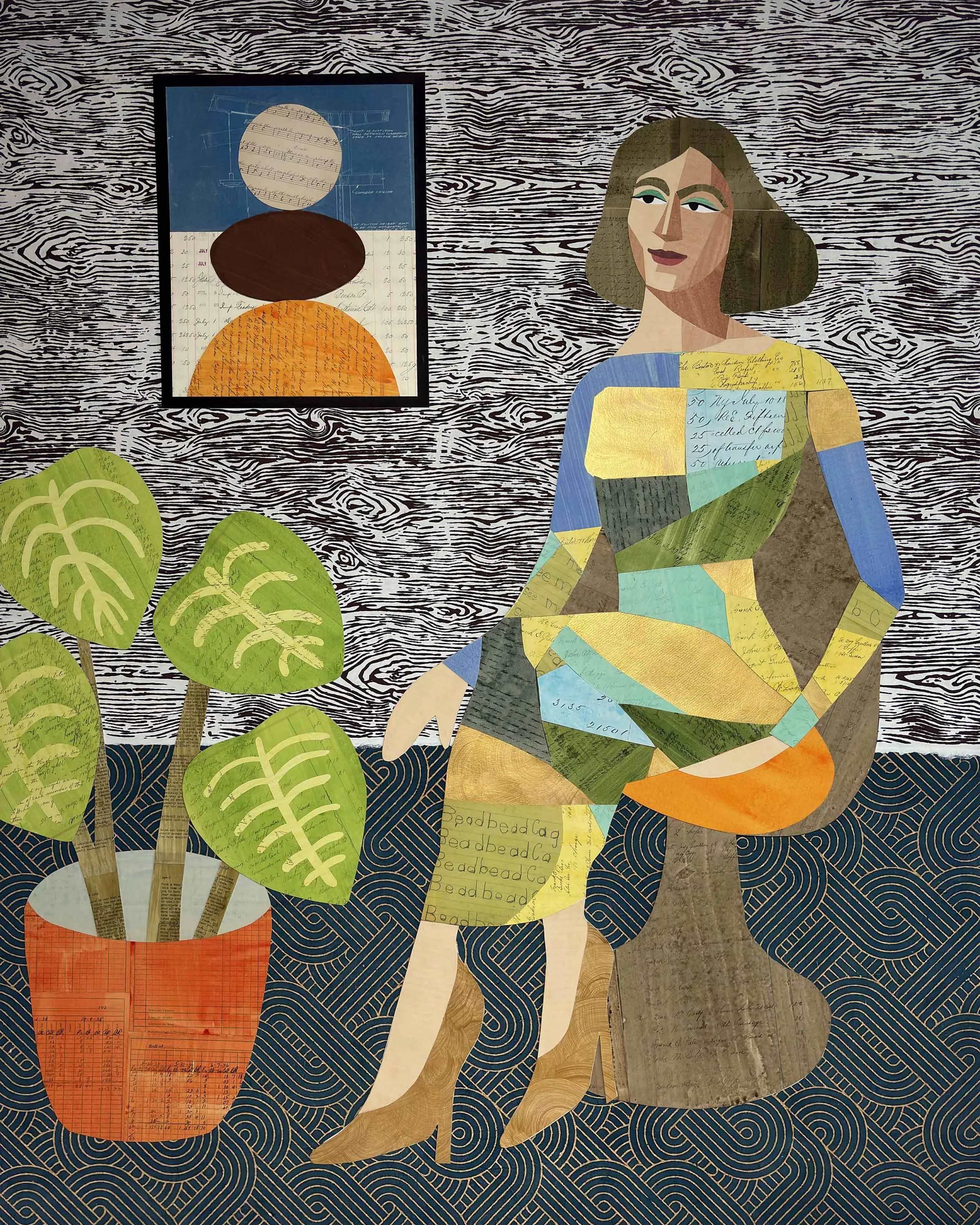
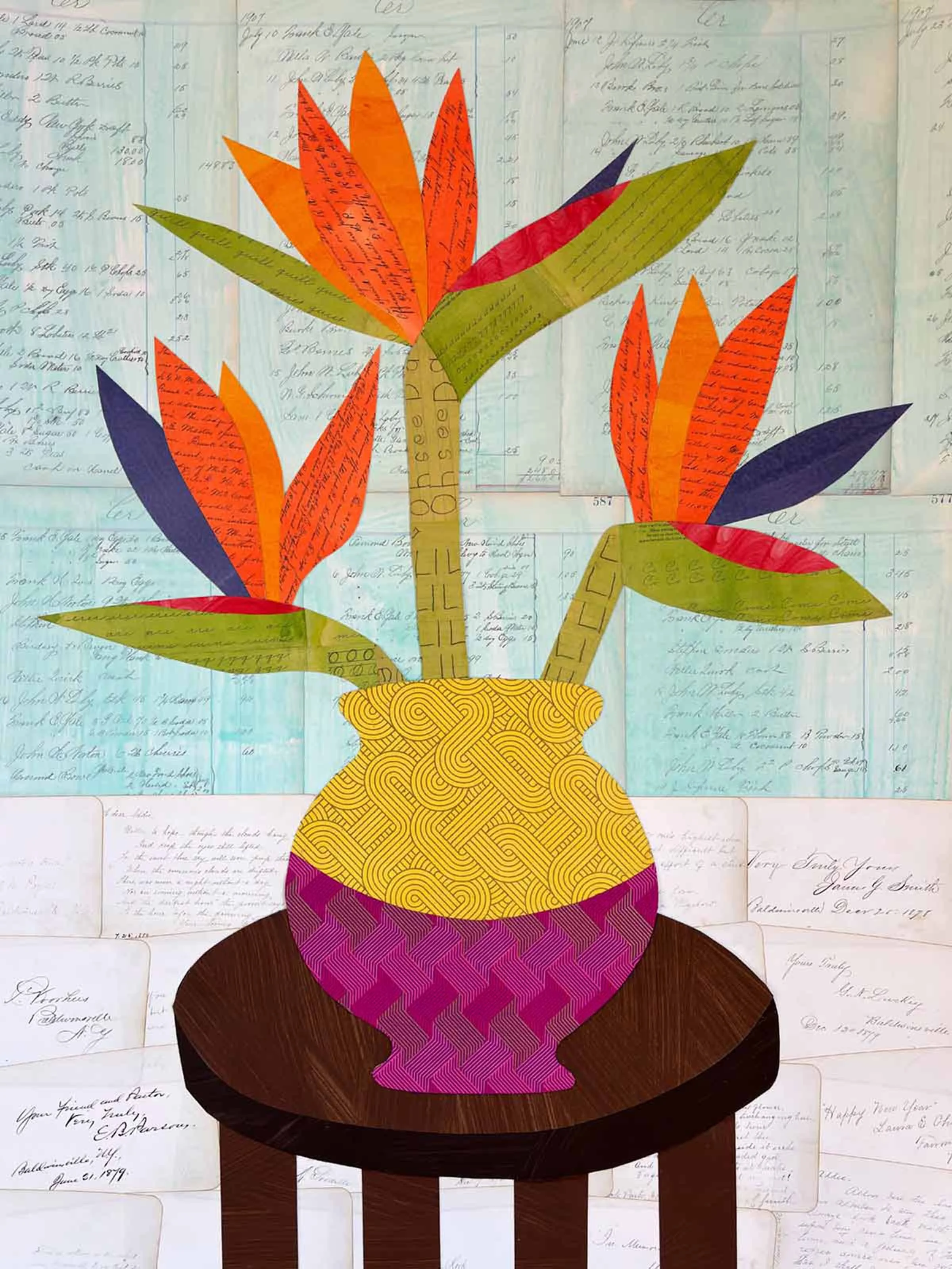
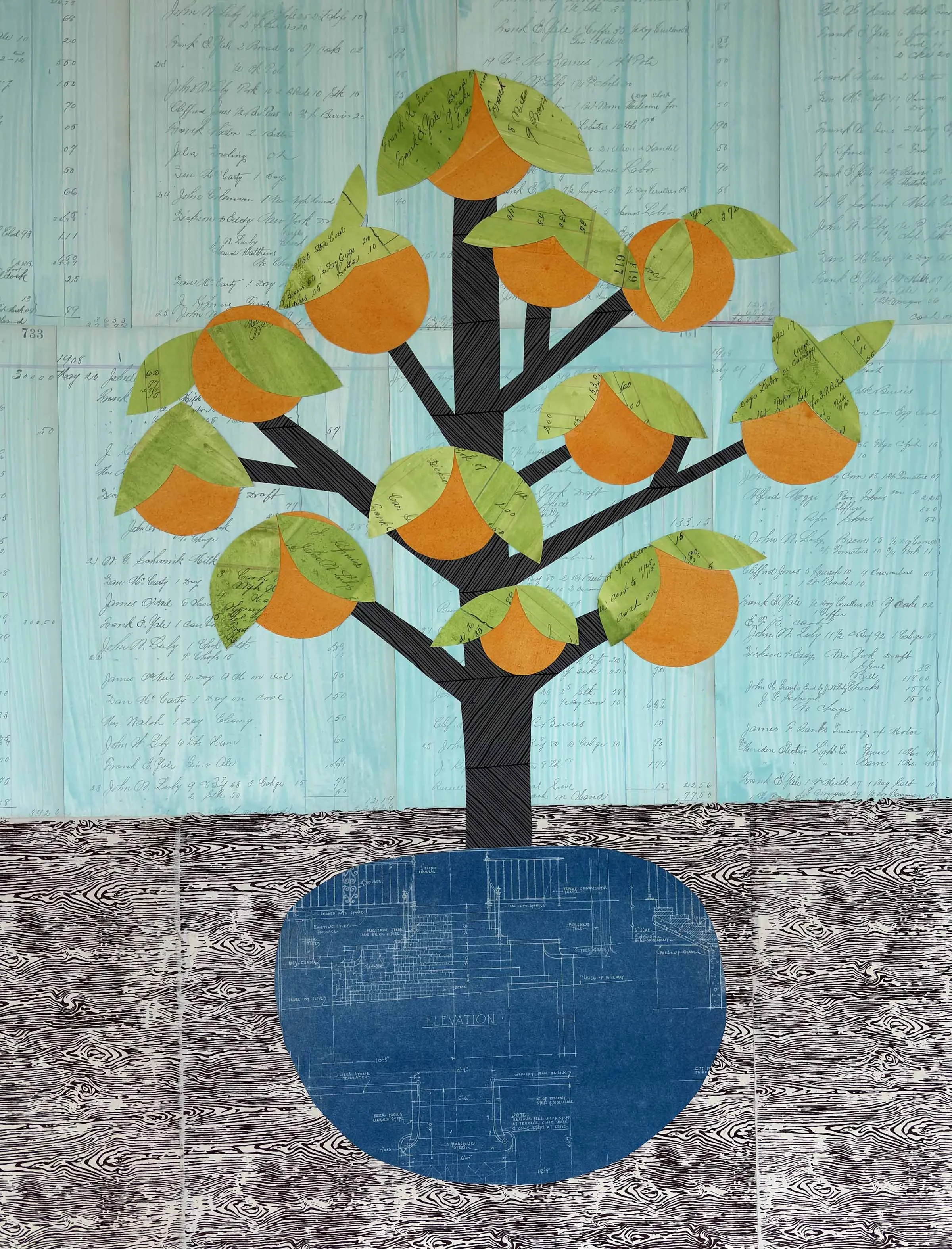
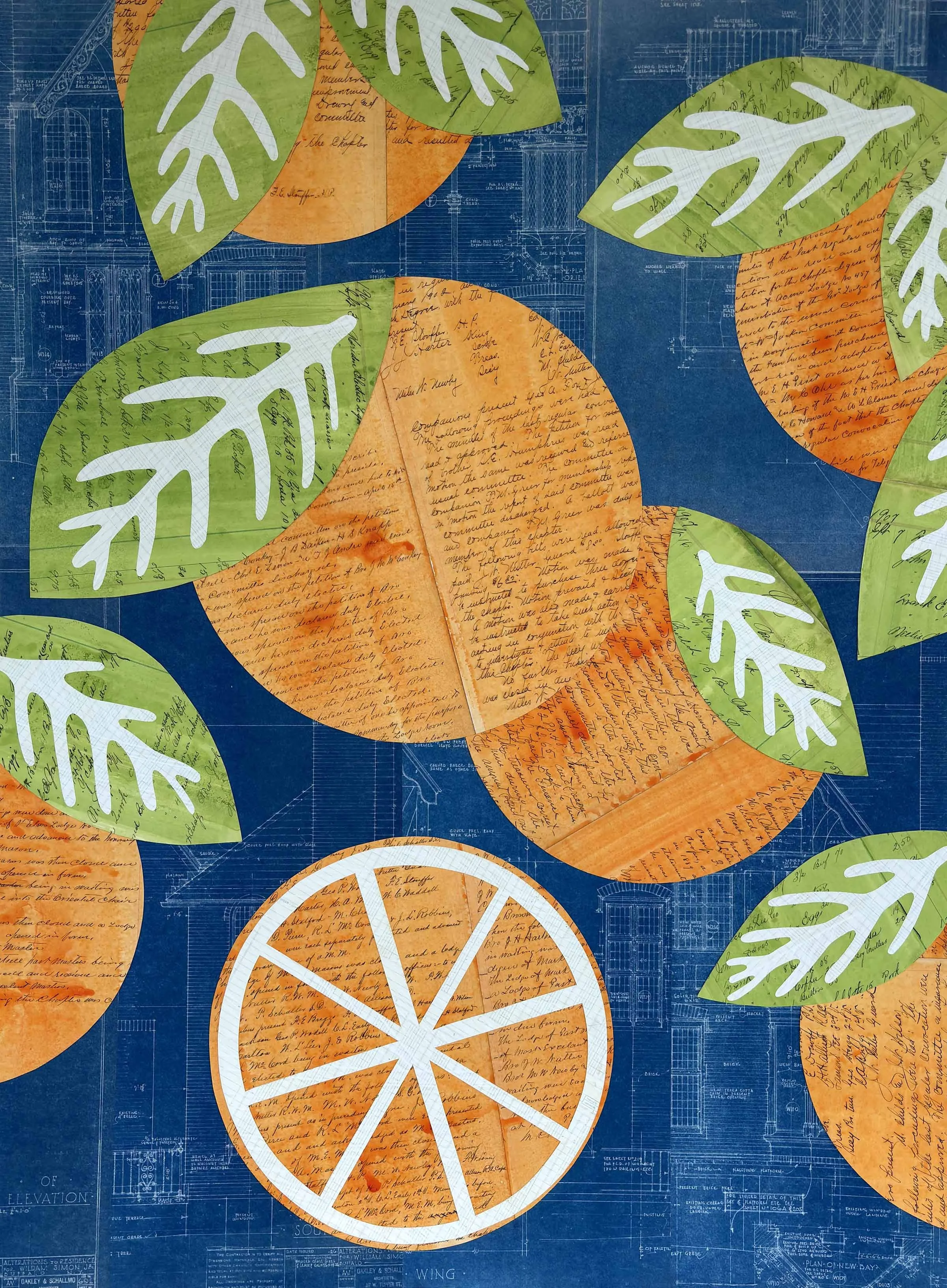
Emily Krill is a Pittsburgh-based artist known for large-scale collages constructed from 19th- and 20th-century paper. Working with ledgers, letters, manuals, blueprints, and discarded documents, she builds layered compositions that bring together figures, objects, landscapes, and abstract forms. Her work explores memory not as nostalgia, but as material, something handled, altered, and carried forward.
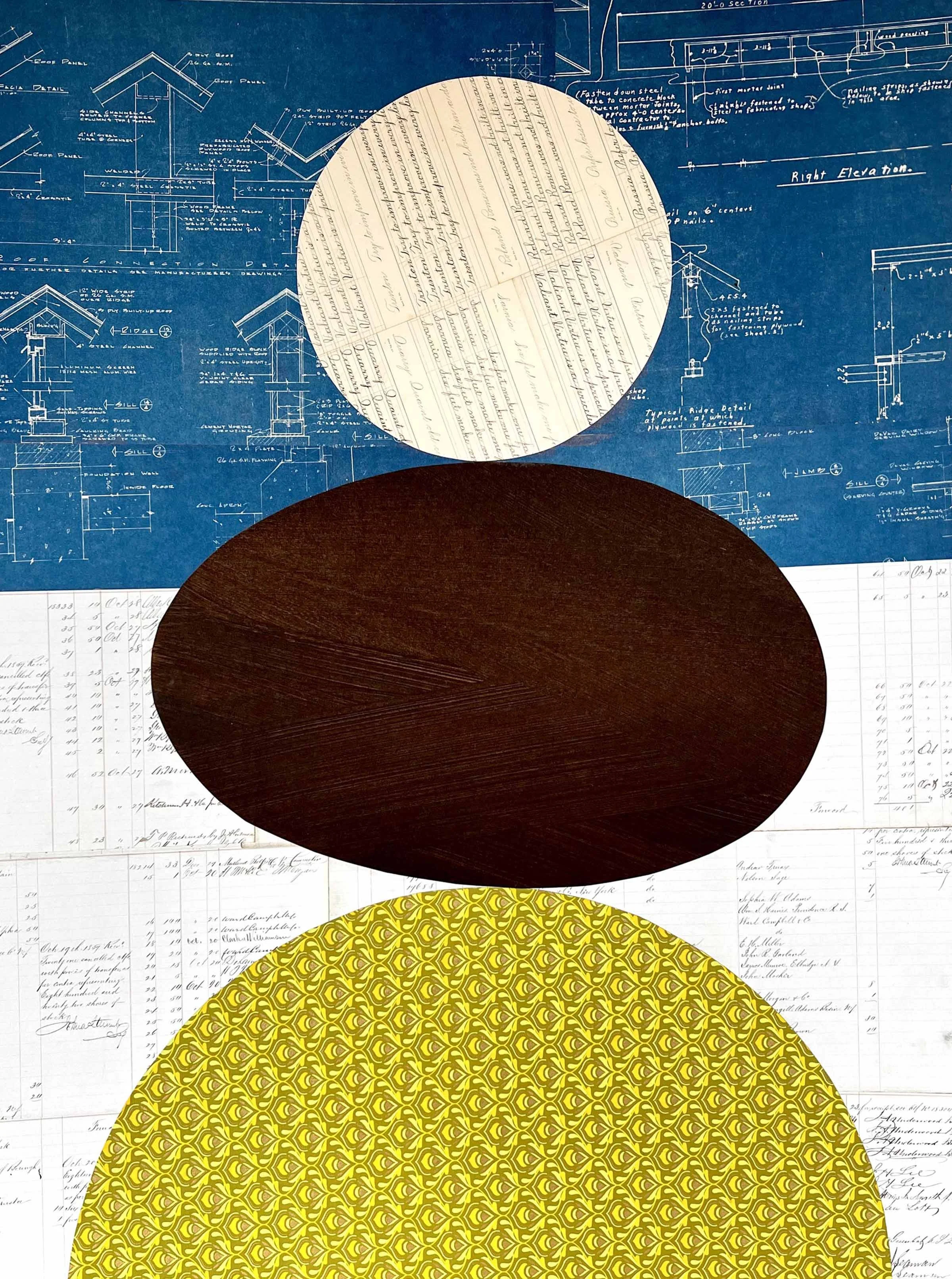
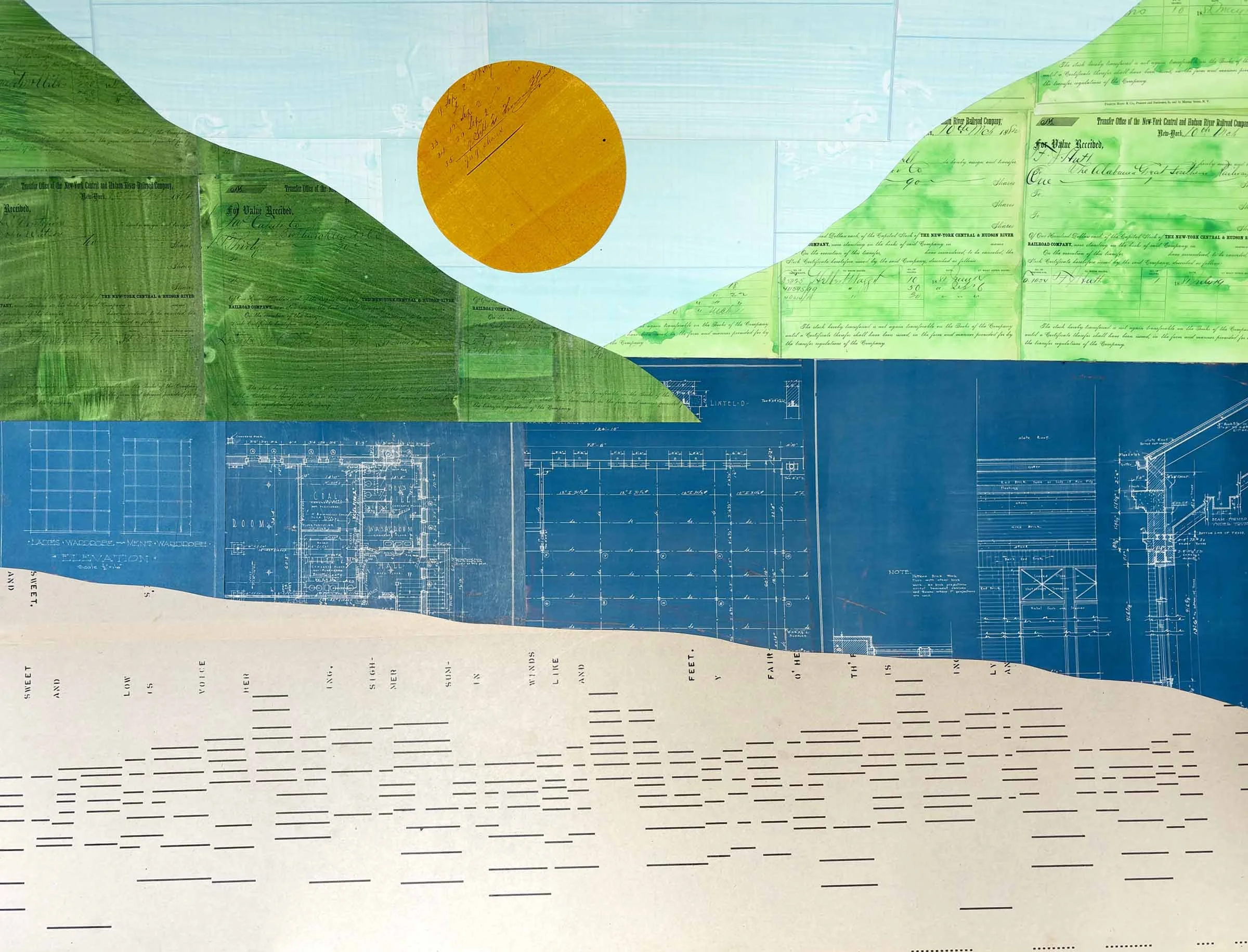
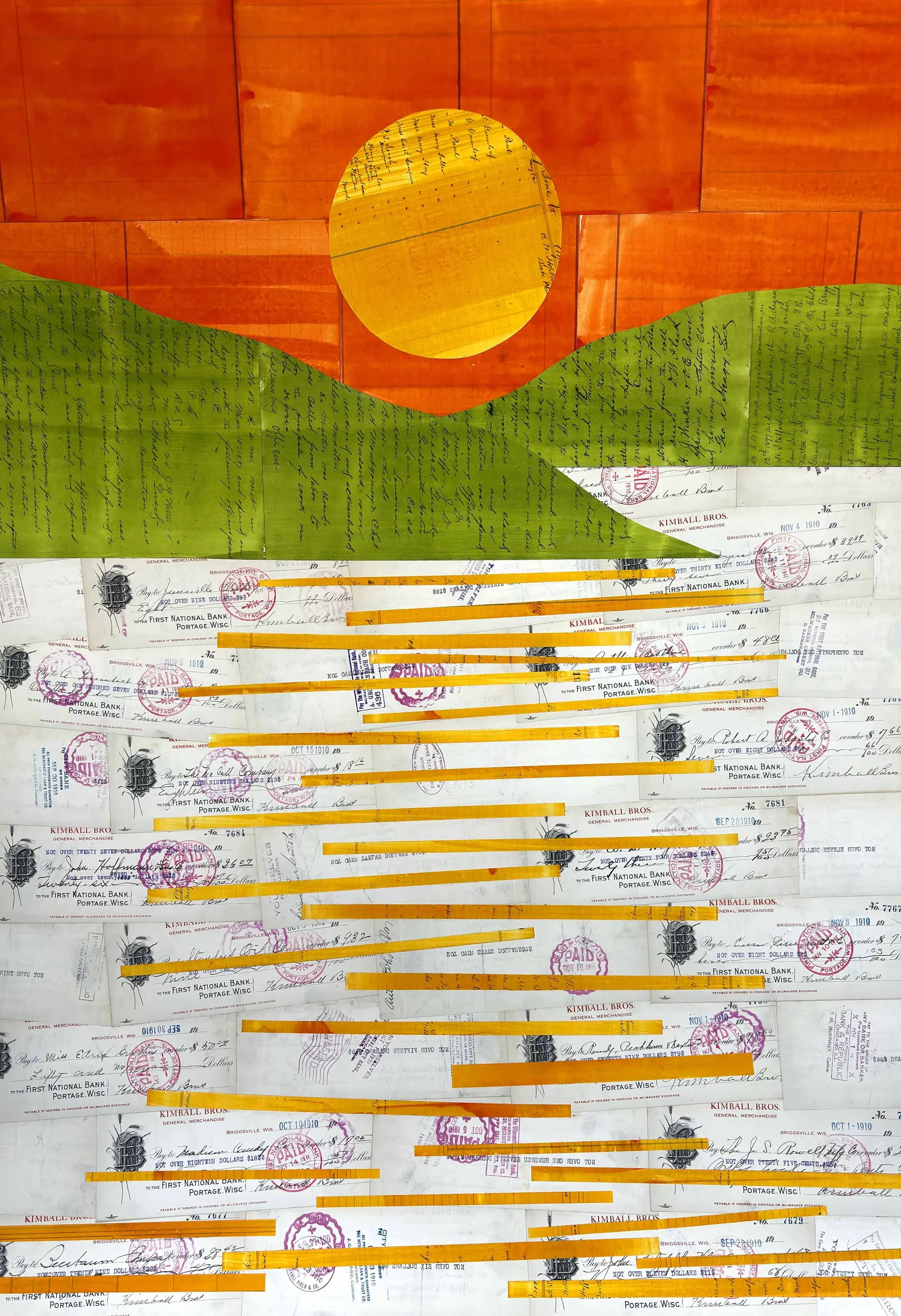
Krill’s process begins with collecting historical paper that bears handwriting, stains, stamps, and marks of use. These materials are ink-washed, cut, layered, and reassembled into carefully structured compositions. Fragments of text and pattern remain visible, allowing each work to carry traces of its previous life while forming a new visual language.
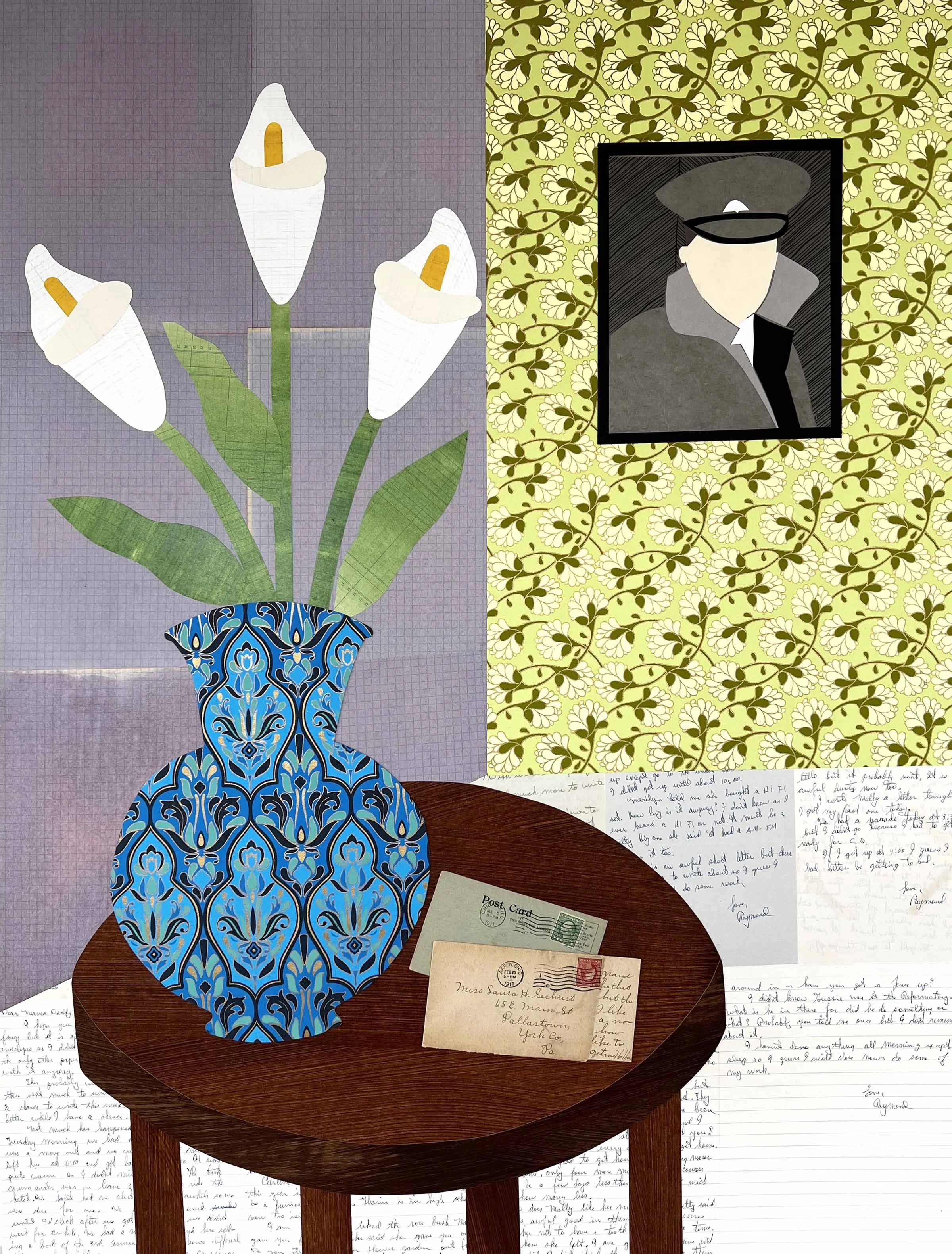
Across her practice, Krill is interested in what endures. Figures often appear seated or still, suggesting moments of pause, while familiar objects and interiors feel uncannily out of time. Drawing from mid-century modern design and domestic ephemera, her work balances clarity and restraint with warmth and material presence.
Her work has been exhibited nationally and is held in private and corporate collections, including the Pittsburgh Foundation. Through collage, Krill considers how the past persists in material form, revealing the quiet presence of history within everyday surfaces.
Emily Krill is a Pittsburgh-based artist known for large-scale collages constructed from 19th- and 20th-century paper. Working with ledgers, letters, manuals, blueprints, and discarded documents, she builds layered compositions that bring together figures, objects, landscapes, and abstract forms. Her work explores memory not as nostalgia, but as material, something handled, altered, and carried forward.
Krill’s process begins with collecting historical paper that bears handwriting, stains, stamps, and marks of use. These materials are ink-washed, cut, layered, and reassembled into carefully structured compositions. Fragments of text and pattern remain visible, allowing each work to carry traces of its previous life while forming a new visual language.
Across her practice, Krill is interested in what endures. Figures often appear seated or still, suggesting moments of pause, while familiar objects and interiors feel uncannily out of time. Drawing from mid-century modern design and domestic ephemera, her work balances clarity and restraint with warmth and material presence.
Her work has been exhibited nationally and is held in private and corporate collections, including the Pittsburgh Foundation. Through collage, Krill considers how the past persists in material form, revealing the quiet presence of history within everyday surfaces.
Quisque iaculis facilisis lacinia. Mauris euismod pellentesque tellus sit amet mollis.